FSG LAB · VIDEO SERIES
Golf is physics.Get it right. Feel follows.
Every ball flight comes down to five things at impact: speed, strike, path, face and attack angle. Find the one that's off, and your swing can be fixed.
Find your fixTarget line
Ball flight
Imagery © NAVER
SLICE, BY THE NUMBERS
- Clubface
- 6° open
- Starts the ball right of the target
- Swing path
- 6° out-to-in
- Cuts across the ball
- The gap
- 12°
- Puts on the spin that curves it right
Result: 64 yards right. Out of bounds.
A right-handed golfer's slice, tracked from above.
Understand the physics behind your swing
Each video takes one piece of the swing: what the ball does, why it does it, and how to fix it.
Upward strike: hit up on the driver
- Symptom
- High, spinny drives that balloon and fall short.
- Cause
- Hitting down on the ball adds backspin and lowers launch.
- Fix
- Ball forward, spine tilted away from the target, and catch the ball just after the low point of the swing.
Quick lessons
One idea at a time, in about a minute.
Tee shot basics
Tee height, strike, slices and swing path, answered.
How high should I tee up my driver?
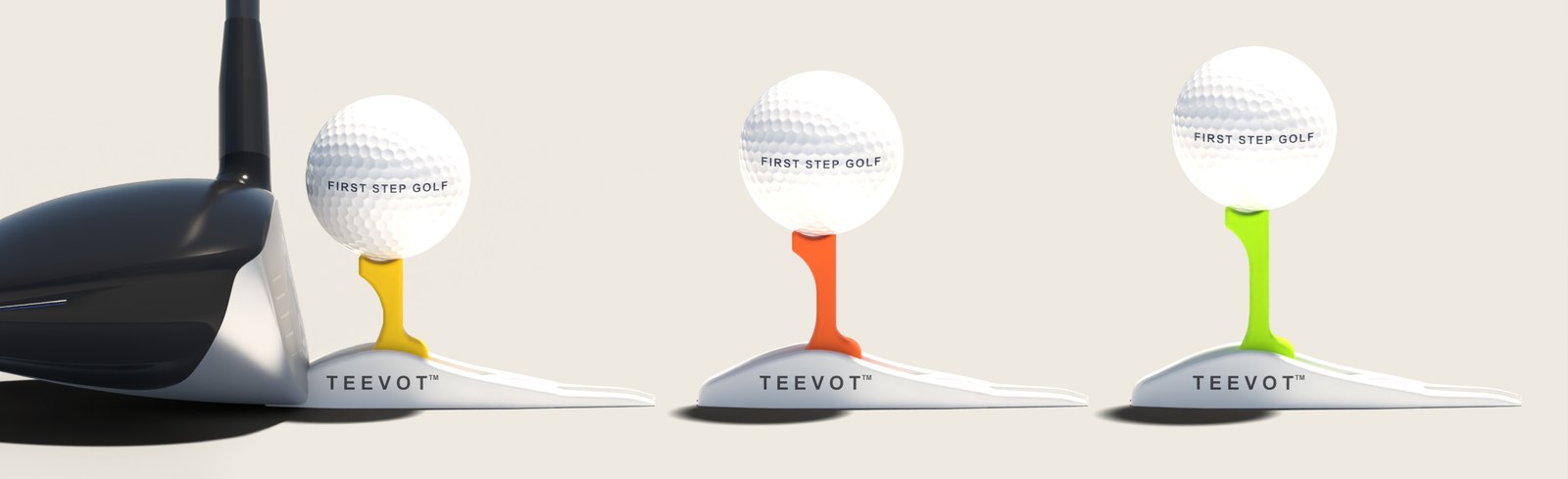
A good starting point is to tee the ball so about half of it sits above the top edge (crown) of the driver at address. That height lets you catch the ball slightly on the upswing, which launches it higher with less spin. The bigger problem for most golfers is consistency: when tee height changes from hole to hole, where the ball meets the face changes too. TEEVOT comes with three tee heights, measured from the ground to the top of the tee: 1.5″ (38 mm), 1.75″ (44 mm) and 2.0″ (51 mm). Pick the one that puts about half the ball above your driver's crown, and you get the same height every time.
Should I hit up on the driver?
For most golfers, yes. Catching the ball slightly on the upswing (a positive angle of attack) raises launch and lowers spin, which usually adds carry distance. Hitting down on the driver adds backspin and can cause high, spinny drives or pop-ups. Play the ball forward in your stance and tilt your spine slightly away from the target.
Why does my drive slice?
For a right-handed golfer, a slice curves right because the clubface is open to the swing path at impact. The most common pattern is an out-to-in path with a face that points right of that path. The start direction comes mostly from the face; the curve comes from the gap between face and path, and the bigger the gap, the bigger the slice.
How do I fix a slice?
Change one variable at a time. Check your aim first: if your feet, hips and shoulders point left of the target, your path usually follows them. Then train a path that comes more from the inside, and square the face to that path so the ball stops curving right. Film a few swings or watch where the ball starts, change one thing, and measure again.
How can I practice an in-to-out swing path on the course?
Pick a start line just right of your target and swing the club along it, from inside the target line to out. A physical reference on the ground works better than a feeling: TEEVOT's launch guide points along your chosen start line, so you can see whether the ball starts where you intended. Groove it on the range, then carry the same routine into practice rounds.
THE GAUGE
Every fix needs a reference.
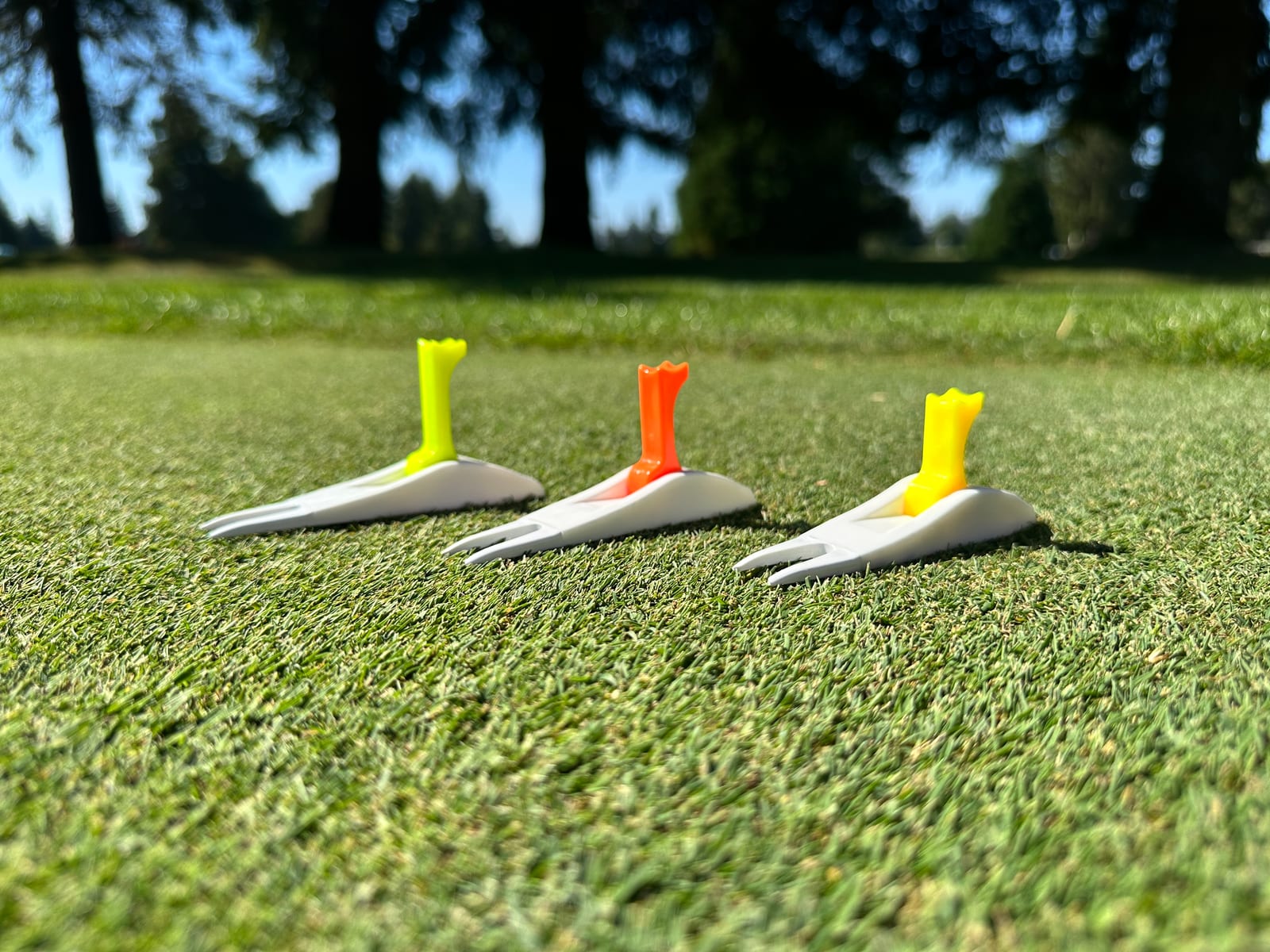
A machinist checks against a gauge, not a guess. In this series we use TEEVOT, a pocket-size training device with an aim line, launch guide and fixed height built in, so every rep starts from the same setup.